What Credit Score Is Needed To Buy A House: A Complete Uk Guide
Table of Contents
- TL;DR
- Understanding credit score ranges is important for home buying.
- What do the numbers mean?
- How scores affect interest rates.
- Improve your score before you apply.
- Use tools to see the big picture
- Step-by-Step: Checking Your Credit Score
- How Different Credit Scores Impact Mortgage Options
- What the numbers mean in practice
- Actionable steps for each credit band
- Improving Your Credit Score Before Applying
- Why the little things matter
- Step‑by‑step cheat sheet
- Real‑world example
- How long will it take?
- Alternative Financing Options for Lower Credit Scores
- Common Misconceptions About Credit Scores and Home Purchases
- Myth 1: A low score means you can’t buy at all
- Myth 2: Paying off a single credit‑card will instantly boost your score
- Myth 3: Your income or savings can fully offset a poor score
- Myth 4: Missing a single payment ruins everything forever
- Myth 5: The “credit score” is the same everywhere
- How to cut through the noise
- FAQ
- What credit score is needed to buy a house in the UK?
- Can I still get a mortgage with a score below 620?
- How does my credit‑score band influence the mortgage products I can access?
- How much does my credit score affect the mortgage interest rate?
- Tip: Aim for under 30 % utilisation on each card and dispute any late‑payment marks you don’t recognise.
- Do I need a bigger deposit if my score is low?
- How long does it take to improve my credit score enough for a better mortgage?
- Should I use a mortgage broker if my credit score is borderline?
- What’s the quickest way to check where my score sits?
- Conclusion
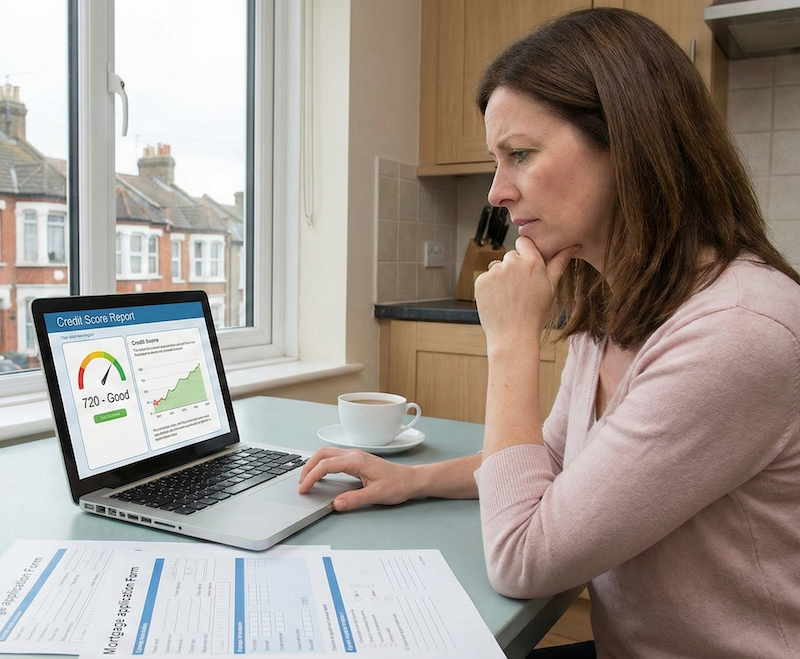
Have you ever looked at a mortgage brochure and wondered if your credit score is in the right place? Many first-time buyers in the UK hit the same wall.
The first sign that you'll meet repayments is your credit score. Depending on the product and the lender's appetite, a score of around 620 is the minimum you'll see advertised, but the magic number can shift depending on the product and the lender's appetite.
What does a score of 620 mean for you? It usually lands you in the 'fair' band, enough to qualify for a standard residential mortgage, but you may face higher interest rates than someone with a 'good' or 'excellent' rating.
Imagine you are looking at a twobed flat. A bank might offer a 3.5% rate if you have a 620 score, but a 2.8% rate if you have a 750 score. A 25year loan can translate into thousands of pounds with a few tenths of a percent.
Don't let the score discourage you. Reducing existing debt, having a stable income, and doublechecking that your credit report is errorfree are all ways to boost your chances.
If you pull your credit report from any of the companies, you can look for any forgotten credit cards. You can increase your score by 1020 points if you correct a late payment.
Your debttoincome ratio is also weighed by the lender. A high monthly debt load can push you into a higher risk category, meaning you might need a larger deposit to offset the risk.
If you have a lower score, the larger the cash you can put down, the more wiggle room you have. If you can front 20% or more of the purchase price, you can get a score in the high500s.
TL;DR
If you want to buy a house, you need a credit score of at least a 620 to get a mortgage.
If you boost that score a few points by clearing errors, reducing debt, or proving stable income, you can save thousands over a 25year loan.
Understanding credit score ranges is important for home buying.
It can feel like a secret code if you look at your credit report and think, "Is this even good enough for a mortgage?" So you know where you are, by cracking it together.
What do the numbers mean?
In the UK most lenders use a three‑digit score that runs roughly from 0 to 999. Here’s a quick cheat‑sheet:
- 0‑579: Poor, you’ll struggle to get any mortgage, and if you do, rates will be steep.
- 580‑669: Fair, the minimum zone for a standard residential loan (think around a 620 rating).
- 670‑739: Good, you’ll see a wider range of products and better rates.
- 740‑999: Excellent, lenders love you, and you’ll be offered the most competitive rates.
That is the baseline most banks use when they ask what credit score is needed to buy a house. Depending on the lender's appetite and the product you choose, the exact cutoff can shift.
How scores affect interest rates.
Two people are looking at the same twobed flat. One has a higher score than the other. The 750score buyer could get a 2.8 % deal, while the 620score buyer could get a 3.5 % deal. Thousands of pounds can be saved over a 25 year term because of the 0.7 % difference.
A higher score can shrink the deposit you need. If you can put down 20 % or more, a specialist lender will accept scores in the high500s, whereas a standard bank might insist on at least a 5 % deposit.
Improve your score before you apply.
What can you do right now? If you miss a payment that isn't yours, you can lose up to 20 points on your credit report. If you want to improve your score, tackle high credit card balances.
Old accounts should be kept open. A decadeold card can hurt you if you close it.
https://www.youtube.com/embed/QGOAwdLfNlE
Seeing those numbers move can feel like a small victory, and that can carry into the mortgage interview. A clear plan shows you are a lower risk when you sit down with a lender.
Use tools to see the big picture
One of the easiest ways to see how your score affects borrowing power is to use a mortgage affordability calculator. The tool will give you a realistic rate range if you plug in your current score, deposit and loan amount.
It is the perfect time to think about the next step in your home search journey. You might start looking at properties with local experts. If you want to move as soon as the lender gives you the green light, Five Town Homes & Living can help you find neighbourhoods that match your budget and lifestyle.
Knowing the score brackets, how they affect rates, and what you can do to improve them turns the mystery of what credit score is needed to buy a house into a manageable checklist. Fix the easy errors, run the affordability calculator, and grab your report. When you are ready, let a trusted estate partner like Five Town Homes & Living show you the homes that fit your newlyoptimised profile.
A 30 day timer is an actionable tip. Within the next month, run the calculator, dispute any inaccuracies, pay down one credit card balance, and pull your credit report. You will have a clear picture of the deposit and a concrete number to quote.
Step-by-Step: Checking Your Credit Score
The first thing most of us do when we hear "what credit score is needed to buy a house" is panic. Do I have a score? How do I find it? The answer is simpler than you think.
You can get a free copy of your credit report. You can pull yours from any of the companies in the UK. The good news? Asking for your own report does not affect your score. There are no hidden fees when you get a free credit report and score from Experian.
You should treat the report like a health checkup. Scan each section, credit cards, loans, missed payments, and flag anything that looks off. You can lose 2030 points without even knowing it.
What should you look for? Here is a quick list.
- The personal details are correct.
- You own every account listed.
- Payment history shows ontime payments, if you see a late mark, investigate.
- Aim for under 30% of the credit limit.
- Too many pulls can lower your score.
Are you able to spot a mistake? You have the right to disagree. The Consumer Financial Protection Bureau that supplied the faulty data should be contacted by the Consumer Financial Protection Bureau. They have to investigate within 30 days if they provide any supporting documents.
It is time to check the number now that you have cleaned up the report. Most UK mortgage lenders look at a score between 300 and 850, but different lenders use different scoring models. The sweet spot for a standard residential mortgage is at least 620. The door to better rates will open if the rate is above 680.
Want to see where you are? Many banks allow you to view a soft pull score on their apps, it won't affect your credit and gives you a ballpark figure. If you use a budgeting app, make sure it has a free creditscore snapshot.
If you have a score, treat it like a living number. Don't open new credit lines unless absolutely necessary and pay down balances. Ontime payments are the most important factor in boosting your score, so set up autopay for any bills that show up on your report.
It's time to schedule a regular checkin. You should pull your report every three months to see how things have changed. Small, consistent actions add up, and before you know it, you will be comfortably above the 620 threshold, ready to lock in a competitive mortgage rate.
How Different Credit Scores Impact Mortgage Options
The answer to "what credit score is needed to buy a house" isn't a single number, it's a spectrum. Your score decides which loan products knock on your door, how hefty the interest rate will be, and whether you need a bigger deposit to keep the lender comfortable.
Three friends want a £300,000 terraced house. Emma has a score of 620, Tom has a score of 680, and Priya has a score of 750. They all qualify on paper, but the offers they receive look different.
What the numbers mean in practice
According to Experian’s recent analysis, a borrower with a 700 plus score enjoyed an average 30 year fixed rate of 7.42% in early 2025, while those hovering around 580 were looking at rates well above 9%.
The Mortgage Reports break the market into credit tiers that map neatly onto the rates you will actually see on a loan offer. The table below shows how a few points can shift you from a pay-more-later scenario to a pay-less-now one.
| Credit Score BandTypical 30‑yr Fixed Rate (2025)Loan Types Most Accessible | ||
| 620‑639 (Fair) | 8.5% to 9.2% | Standard conventional, high‑deposit schemes |
| 680‑699 (Good) | 7.4% to 8.0% | Conventional, some shared‑ownership, limited‑deposit deals |
| 750+ (Excellent) | 6.5% to 7.0% | Best‑rate conventional, jumbo, low‑deposit specialist lenders |
Emma, with her 620 score, needed a 20% deposit just to get a 9% rate on a 25‑year mortgage. That extra deposit shaved roughly £150 off her monthly payment, but the interest over the life of the loan added up to about £30,000 more than Tom’s plan.
Tom, sitting at 680, could qualify for a 5% deposit deal and lock in a 7.4% rate. By paying down a £2,500 credit‑card balance and moving a late payment off his report, he nudged his score up by 30 points and saved himself around £2,400 a year.
Priya, with a sparkling 750, was instantly offered the lowest‑rate 5%‑deposit product and even got a small discount for opting for a slightly shorter 20‑year term. Her monthly mortgage payment was £350 lower than Emma’s, and she’ll pay almost £40,000 less in interest overall.
So, what can you do right now to tip the scales in your favour?
Actionable steps for each credit band
- Fair (620‑639): Stack a larger deposit if you can, every 1% you add cuts the loan‑to‑value ratio and can knock a full percentage point off the rate.
- Good (680‑699): Target a credit‑card utilisation under 30% and dispute any lingering errors; a clean report often pushes you into the next tier.
- Excellent (750+): Shop around aggressively. Even a 0.25% drop can save you thousands, so get at least three quotes before you commit.
If you’re unsure where you sit, the How Much Do You Need To Earn To Buy A £250,000 House? guide walks you through a quick affordability check that factors in your credit‑score band.
Bottom line: your credit score isn’t just a gate‑keeper; it’s the lever that determines which mortgage doors stay open and how much you’ll pay to walk through them. Keep an eye on your score, treat it like a living number, and use the steps above to climb the ladder toward better rates.
Improving Your Credit Score Before Applying
You've probably felt that knot in your stomach when you see the “minimum 620” line in a mortgage brochure, right? The good news is you don't have to accept it as fatem a few focused tweaks to your credit profile can push you well above the threshold.
Why the little things matter
Think of your credit score like a report card that lenders skim before they hand you a mortgage. Experian explains that payment history alone accounts for 35% of your FICO® score, so a single late payment can feel like a heavy backpack you can't shake off.
But it isn't just about punctuality. The amount you owe, how long you've been borrowing, the mix of credit types and fresh enquiries all play a part. Even if your score sits at a decent 660, trimming your utilisation can nudge it into the “good” band and shave a point or two off the rate you’ll be offered.
Step‑by‑step cheat sheet
Grab a notebook or open a note‑taking app, we’re about to break this down into bite‑size actions you can start today.
- Set autopay for every recurring bill. Missed payments are the fastest way to lose points. A simple calendar reminder or a direct debit means you’ll never forget the due date again.
- Trim credit‑card balances. Aim for under 30% utilisation on each card; if you have a £4,500 limit, keep the balance below £1,350. Paying down a high‑interest card first often yields the quickest score lift.
- Keep old accounts open. Length of credit history makes up about 15% of your score. Even if you don’t use a card, a small regular purchase and immediate pay‑off keeps that line active without hurting your utilisation.
- Dispute inaccuracies. A single erroneous late mark can knock off 20‑30 points. Request a free report, flag anything you don’t recognise, and follow the bureau’s dispute process, it’s usually resolved within 30 days.
- Limit new credit pulls. Hard enquiries count for roughly 10% of your score. If you’re shopping around for a mortgage, use a soft‑pull pre‑qualification tool first, then cluster any actual applications within a 14‑day window so they count as one.
- Consider authorised‑user status. Being added to a family member’s well‑managed credit card can give an instant boost, especially if you’re just starting out.
So, which of these feels the easiest to tackle first? For many, setting up autopay is the quickest win, it removes human error and builds a flawless payment history.
Real‑world example
Take Jamie, a first‑time buyer in Leeds. His score hovered at 640, and his mortgage quote came with a 8.5% rate. He paid down a £3,200 credit‑card balance, disputed a mistaken £0 payment marked as late, and kept his oldest card active. Within three months his score climbed to 695, and the same lender offered him a 7.4% rate, a saving of over £1,200 per year on a £200,000 loan.
How long will it take?
Improvement isn’t instant, but you’ll start to see movement within a few billing cycles. Credit card issuers usually report balances monthly, so a steady pay‑down can reflect on your report after 30‑45 days. Equifax advises patience and consistency, noting that negative items stay for up to seven years, yet their impact lessens as you demonstrate good behaviour.
Does this feel doable? Absolutely. Pick one or two actions, stick with them for a quarter, then check your score again. Each small habit compounds, turning a “maybe I can’t” mindset into a “watch me get that better rate”.
 When your score finally nudges into the 680‑699 range, you’ll notice lenders start offering low‑deposit products and better interest terms. That’s the sweet spot where you can lock in a competitive mortgage without having to double‑up your deposit.
Ready to put the plan into action? Start with the autopay setup tonight, and give yourself a three‑month checkpoint. You’ll be amazed at how quickly the numbers move when you treat your credit like a garden, water it regularly, prune the excess, and watch it grow.
Alternative Financing Options for Lower Credit Scores
So you’ve hit the dreaded 620‑range and the traditional mortgage market is looking a bit cold. That feeling of being stuck? I’ve been there, and the good news is there are actually a handful of routes that can get you over the line without needing a perfect credit score.
First up, specialist lenders. These aren’t the big high‑street banks that only talk to the ‘excellent’ crowd. They focus on borrowers with scores in the high‑500s to low‑600s, often pairing a higher deposit with a slightly higher rate.
What does that look like in practice? Imagine you’re eyeing a two‑bed flat for £200,000. With a 580 score, a specialist lender might ask for a £50,000 deposit and offer a 3.5% rate. That’s still better than the 5%‑plus you’d see from a mainstream bank refusing you outright. The trade‑off is a larger cash outlay now, but the peace of mind of actually getting a mortgage is priceless.
Another avenue is government‑backed schemes. In the UK, shared‑ownership and Help to Buy can be more forgiving on credit, especially when you bring a solid deposit. Lenders look at the overall risk profile, so a stable job and low debt‑to‑income ratio can offset a less‑than‑ideal score.
Then there’s the option of a credit‑union loan. Credit unions are member‑owned and tend to take a more holistic view of your finances. They’ll often work with you on a repayment plan that fits your budget, and many have products designed for scores in the 560‑630 band. The rates might be a touch higher than a prime‑rate mortgage, but the flexibility can be a lifesaver if you’re rebuilding credit.
Now, let’s talk about a strategy that doesn’t involve finding a new lender at all: using a mortgage broker. A broker knows which lenders are willing to look past a low score and can negotiate on your behalf. They’ll also help you bundle any existing debts into a more manageable repayment plan, which can improve your debt‑to‑income ratio, a key factor for lenders. If you’re not sure where to start, check out Mortgage Broker Vs Bank: Which Path Leads To A Better Home Loan? for a quick rundown of the pros and cons.
What about using a co‑borrower? Adding a partner or family member with a stronger credit profile can lift the overall application score. Just make sure both parties are comfortable with the shared responsibility, because missed payments will affect both credit files.
And don’t overlook the power of a guarantor loan. A trusted guarantor, often a parent, promises to cover the mortgage if you default. Lenders see this as added security and may offer you a deal you wouldn’t otherwise qualify for. The downside is you’re putting someone else’s credit on the line, so it’s worth having a frank conversation about the risks.
Finally, consider a “buy‑to‑let” route if you have an eye on an investment property. Some specialist buy‑to‑let lenders are less stringent on personal credit because the property’s rental income provides a buffer. You’ll need to prove the rental yield covers the mortgage, but this can be a clever way to get on the property ladder while you continue to improve your personal score.
Bottom line: a low credit score isn’t a dead‑end, it’s just a signal that you may need to bring a bit more to the table or look at niche products. Combine a larger deposit, a specialist lender, or a broker’s expertise, and you’ll find a path forward. Remember, every step you take to improve your score, paying down one credit‑card balance, disputing a stray late mark, also makes the next round of financing easier. Keep the momentum going, and you’ll soon be holding the keys to your new home.
Common Misconceptions About Credit Scores and Home Purchases
Ever heard someone say “my credit score doesn’t matter if I have a big deposit”? It’s a comforting myth, but the truth is a bit messier.
First, let’s admit the feeling, you’ve spent weeks polishing your finances, only to read a headline that seems to throw it all away. That moment of doubt is exactly why we need to separate fact from fiction.
Myth 1: A low score means you can’t buy at all
It’s easy to think a score under 620 shuts the door on every mortgage. In reality, lenders have a toolbox of products that look beyond the single number. Specialist lenders, buy‑to‑let deals or higher‑deposit options can still work for you, even if the score sits in the high‑500s.
But the myth persists because many borrowers hear “minimum 620” and assume it’s a hard cutoff. The reality? It’s a baseline for standard deals, not a universal rule.
Myth 2: Paying off a single credit‑card will instantly boost your score
We all love the quick‑win story, “clear this £1,000 balance and watch your score jump 100 points”. The truth is more nuanced. Payment history, credit utilisation, length of credit history and even the mix of credit types all feed the algorithm. Dropping one balance helps, but the lift is usually modest unless your utilisation was sky‑high.
According to Experian explains, lenders consider a range of behaviours and different agencies may calculate slightly different scores. So a single action won’t magically rewrite the whole picture.
Myth 3: Your income or savings can fully offset a poor score
Imagine you’ve saved a 30% deposit, but your score is 580. Some lenders will still require a higher deposit or a specialist product, because they see the score as a proxy for future repayment risk. Income helps, but it doesn’t erase the risk signal that a low score sends.
That’s why you’ll often hear advisors suggest a “bigger deposit + specialist lender” combo rather than relying on income alone.
Myth 4: Missing a single payment ruins everything forever
It feels dramatic when that late mark appears, but most scoring models treat it as a temporary blip. After 12‑24 months of on‑time payments, the impact fades. The key is to keep the pattern clean going forward, not to panic and think the damage is irreversible.
And yes, you can dispute inaccuracies, a mistaken late payment can shave 20‑30 points, so a quick check of your report is always worth the effort.
Myth 5: The “credit score” is the same everywhere
There isn’t a single, universal number. Experian, Equifax and TransUnion each produce their own score, and many lenders run an internal version too. That’s why you might see a “620” requirement from one bank and a “660” from another. It’s less about the exact digit and more about the band you fall into, fair, good, excellent.
How to cut through the noise
Start with a free check of each of your three credit reports. Look for:
- Incorrect personal details or unknown accounts
- Late marks you can dispute
- Credit‑card balances above 30% of limits
Then decide which myth is holding you back. If you’re clinging to the “score doesn’t matter if I have a deposit” story, explore specialist lenders who accept higher‑risk bands. If you’re chasing the “instant boost” fantasy, focus on a steady pattern of on‑time payments and lower utilisation instead.
Finally, remember that a credit score is just one piece of the puzzle. Lenders also weigh debt‑to‑income ratio, employment stability and the size of your deposit. Treat your score like a garden: water it with consistent good habits, prune the excess debt, and give it time to grow.
When the myths melt away, you’ll see a clearer path to the front door, whether that means a standard mortgage, a specialist product, or a co‑borrower stepping in to strengthen the application.
FAQ
What credit score is needed to buy a house in the UK?
Most lenders look for a score of at least 620 before they’ll even consider a standard residential mortgage. That number sits in the “fair” band, so you’ll usually get an offer, but the rate might be a touch higher than someone with a “good” score. If you can push into the 680‑700 range, you’ll start seeing lower‑rate products and smaller deposit requirements.
Can I still get a mortgage with a score below 620?
You can, you’re not locked out. Specialist lenders, some credit‑union programmes, and government‑backed schemes will entertain scores in the high‑500s if you can put down a larger deposit, often 20‑25 % of the purchase price. The trade‑off is a slightly higher interest rate, but it’s still better than being forced to rent indefinitely.
How does my credit‑score band influence the mortgage products I can access?
Think of the bands as doors. In the fair range (620‑639) you’ll mostly see standard mortgages that require a higher deposit and carry higher rates. Move into the good range (680‑699) and lenders start offering low‑deposit deals, shared‑ownership options and a few specialist products. When you break into the excellent band (750+) the best‑rate conventional loans, jumbo mortgages and even some interest‑only deals become available. Each step up widens your choice and can shave a percentage point off the rate, which adds up to big savings over the life of the loan.
How much does my credit score affect the mortgage interest rate?
The difference can feel huge. A borrower sitting at 620 might be offered a 8.5 % rate, whereas someone at 680 could see that drop to around 7.4 %. Over a 25‑year term that shift can save you thousands of pounds in total interest. The key is to keep utilisation low and tidy up any errors, those small moves can shave a point or two off the rate.
Tip: Aim for under 30 % utilisation on each card and dispute any late‑payment marks you don’t recognise.
Do I need a bigger deposit if my score is low?
Yes, lenders use the deposit as a safety net. If your score is hovering in the 560‑600 band, offering a 20‑25 % deposit tells the bank you’re less risky, which can unlock a mortgage that would otherwise be denied. It also helps you qualify for specialist products that aren’t available to lower‑deposit buyers.
How long does it take to improve my credit score enough for a better mortgage?
Credit‑card balances are reported monthly, so paying down a high balance can start showing up within 30‑45 days. Disputing an inaccurate late payment usually resolves in 30 days as well. Most people see a noticeable bump after three to six months of consistent on‑time payments and reduced utilisation.
Should I use a mortgage broker if my credit score is borderline?
Using a broker can be a smart move. They know which lenders specialise in higher‑risk bands and can package your application to highlight the strengths, a solid job, low debt‑to‑income ratio, or a sizable deposit. A broker also saves you time by handling the paperwork and negotiating the best rate on your behalf.
What’s the quickest way to check where my score sits?
Start with a free check from the three major bureaus, Experian, Equifax or TransUnion. The soft‑pull report won’t dent your score and gives you a clear picture of your current band. From there, pick one or two actions from the checklist above and set a three‑month reminder to re‑check.
Conclusion
So, what does all this mean for you when you ask yourself what credit score is needed to buy a house?
In short, aim for at least a 620 score to unlock a standard mortgage, but nudging into the 680‑700 band can shave a whole percentage point off the rate and save you thousands over the term.
The easiest win is to tidy up one thing at a time, set up autopay on every recurring bill, bring credit‑card utilisation under 30 % and dispute any errors you spot.
Once those basics are solid, check your score every three months; a small bump of 20‑30 points often translates into a noticeably lower interest offer.
If you’re still hovering just below the threshold, consider a larger deposit or a specialist lender, they’ll look past the number and focus on your overall picture.
Remember, a credit score is only one piece of the puzzle; steady income, manageable debt‑to‑income ratio and a clear plan are equally vital.
Take the next step today: pull a free soft‑pull report, pick one quick win, and set a calendar reminder for a three‑month check‑in, you’ll be surprised how fast the numbers move when you treat your credit like a garden you water regularly.

![What Is The Minimum Down Payment (Deposit) For A House In The Uk? [2026][Short Version]](https://mortgagemapper.com/featured-images/what-is-the-minimum-down-payment-deposit-for-a-house-in-the-uk-2026-short-version.jpg)